
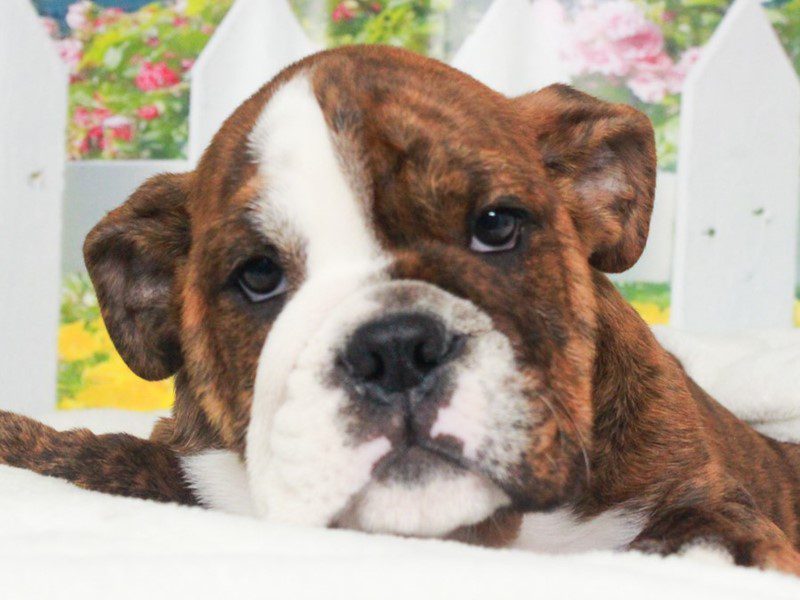
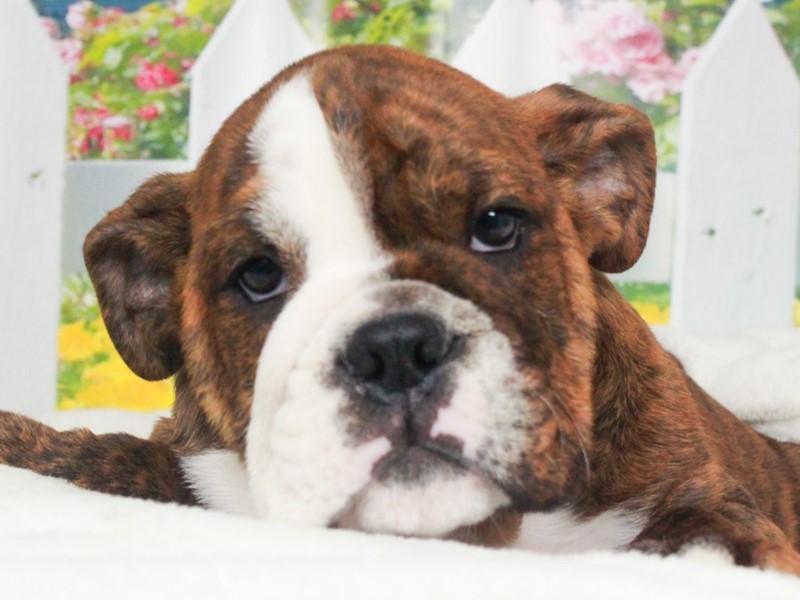
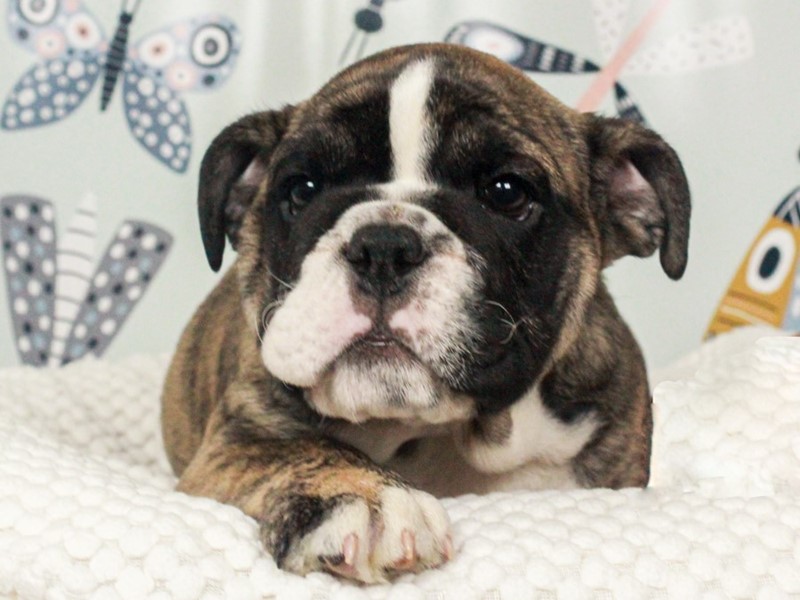
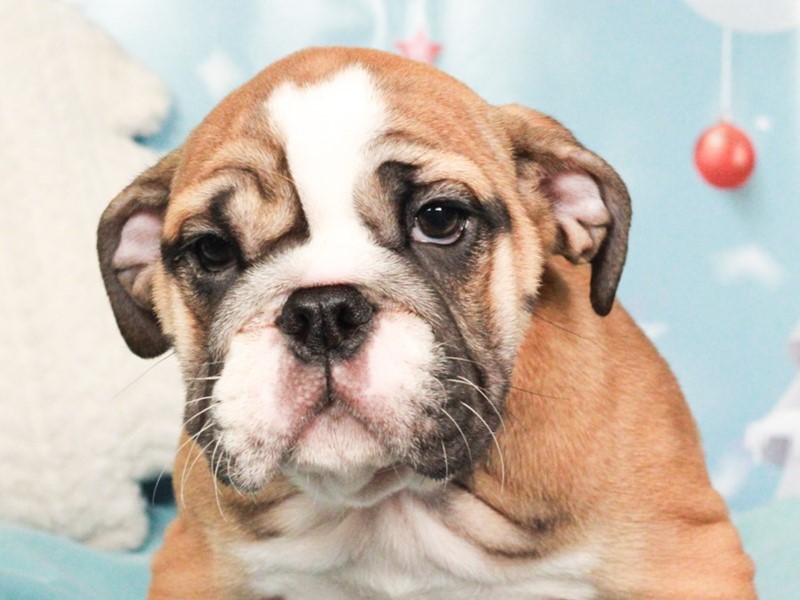
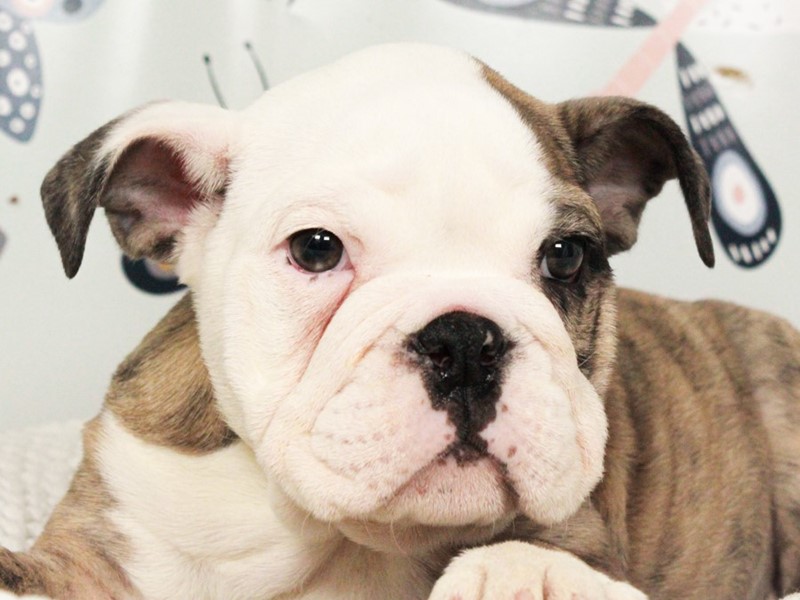
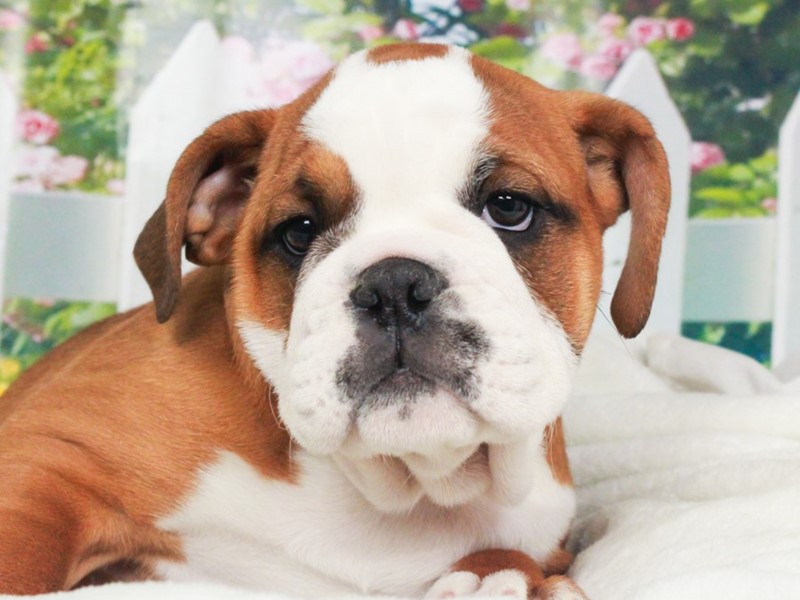
- Breed English Bulldog
- Birth Date 12/12/2025
- Color BRNDL & WHT
- Gender Male
- Pet ID 47801
- Location Animal Kingdom Tucson Mall
- Breeder Name Leslie Albert/ EXEMPT
English Bulldog - 47801
Interested in this English Bulldog? Please call 520-408-1750 to schedule an appointment or send us a message below.
Other Available English Bulldog Puppies
About the English Bulldog Breed
Overview
The English Bulldog is a distinctive, muscular, and famously wrinkled breed: compact, sturdy, and instantly recognizable by its broad head, flattened muzzle, and strong build. Adults typically stand about 14–15 inches tall at the shoulder and weigh between 40–50 pounds (roughly 18–23 kg). Their laid-back, loyal nature makes them excellent for families or individuals looking for a calm, steady canine companion.
The English Bulldog is recognized by major kennel clubs and international canine organizations, including the American Kennel Club (AKC), The Royal Kennel Club (UK), United Kennel Club (UKC), and the Fédération Cynologique Internationale (FCI), reflecting its long-established breed standards and global recognition.

History
The Bulldog’s ancestry dates back centuries. Originally bred in England as bull-baiters and butcher’s dogs, they were later re-imagined by enthusiasts who sought to soften their temperament and transform them into companion dogs. Over time, selective breeding emphasized gentleness, loyalty, and calmness over aggression, producing the loving, mellow Bulldog we know today.
Background & Development
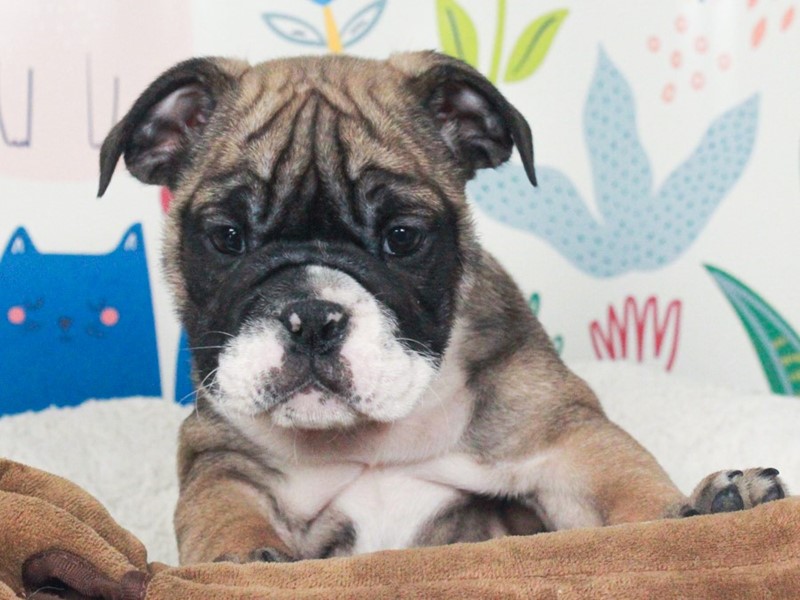
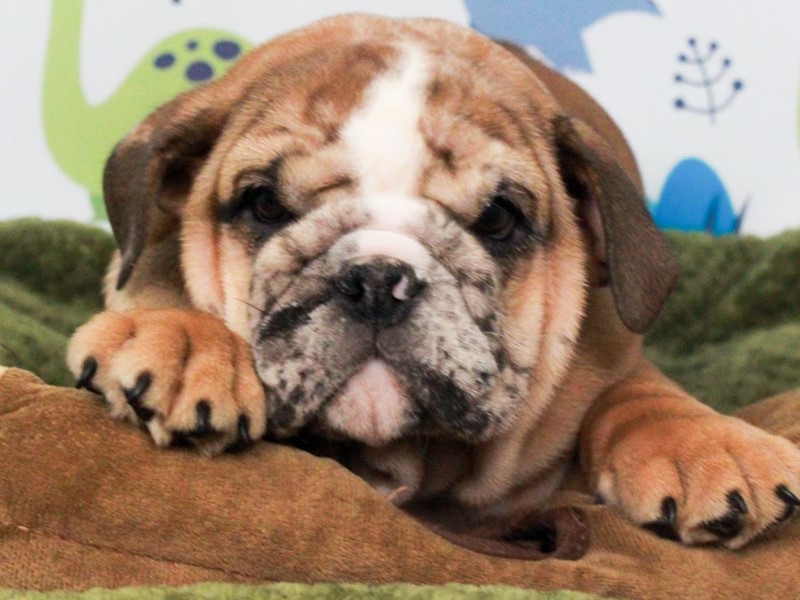
English Bulldogs are unmistakable in appearance: short, broad bodies with heavy bones; a large, rounded head; drooping lips; and distinctive wrinkles and folds particularly around the face and neck. Their coat is short, smooth, and usually comes in colors like brindle, fawn, red, white or piebald combinations. Though their appearance is robust, Bulldogs have adapted to a more sedentary lifestyle. Modern breeding prioritizes companionship rather than physical working ability; while they retain their sturdy build, their energy levels and exercise needs tend to be moderate, making them well-suited to urban or indoor living.
Temperament
Don’t be fooled by their gruff features: English Bulldogs are renowned for being calm, loving, and dependable. They tend to form deep bonds with their families and often display loyalty, affection, and quiet companionship. They tend to be gentle with children and other pets, and their predictable, even-tempered nature makes them a great fit for households seeking a mellow, steady dog rather than a high-energy companion.
Because of their brachycephalic (short-muzzled) anatomy, Bulldogs can be prone to heavy snorting, panting, and snoring. They may also be sensitive to high temperatures or overexertion, so their lifestyle needs to accommodate plenty of shade, cool airflow, and careful activity management. Training and socialization are important, as with any breed; but given their calm nature, positive reinforcement and gentle consistency tend to work best.
Care & Environment
English Bulldogs are well suited to indoor living and adapt comfortably to apartments or houses. They do not require long walks or intense exercise; short, leisurely strolls or gentle indoor play usually meet their activity needs. This makes them a good match for owners with moderate activity levels or urban lifestyles.
Bulldogs are prone to certain health concerns, including respiratory issues, overheating, and joint or skeletal challenges. Awareness of climate, activity limits, and regular veterinary care is essential. A calm environment and attentive ownership support their overall well-being.
Grooming
English Bulldogs have a short coat that is generally easy to maintain with occasional brushing. However, their facial wrinkles and skin folds require regular cleaning and drying to reduce the risk of irritation or infection. Routine hygiene, nail trimming, and ear care are important parts of their grooming routine.



Reviews
There are no reviews yet.