We love our dogs, and our dogs love us. Under ordinary circumstances, this bond is one of the most wonderful things in the world! However, just like for humans, a bond that becomes too codependent becomes unhealthy. Anywhere between 20%-40% of dogs suffer from separation anxiety… and this number may have grown significantly since the pandemic! Here are some steps you can take to prevent separation anxiety from ever becoming an issue for your puppy!
A Quick Overview
- Dogs are most likely to develop separation anxiety as a young puppy or during times of great change
- Start working with your puppy as soon as possible!
- A crate is an invaluable tool in helping your dog feel secure and keeping them safe
- Teach your dog to be comfortable being alone by starting with small periods of absence and building up to longer periods
- Give your dog special, high-value treats or enrichment toys to keep them occupied and content
A Closer Look
Identify Puppies Most at Risk
Consider Breed

While all puppies would benefit from building independence, some dog breeds are especially prone to separation anxiety. Working breeds, such as Australian Shepherds, German Shepherds, and Vizslas, were bred to run around all day. This excess energy is often not fully burnt off in modern life, and dogs may channel this extra energy into anxiety. “Velcro breeds” that were bred for close companionship, such as Papillons, Bichon Frises, or Cavalier King Charles Spaniels can also be predisposed to separation anxiety.
Common Triggers of Separation Anxiety
Separation anxiety more commonly develops during adolescence, but dogs of any age can develop separation anxiety. Separation anxiety usually develops during times of major change for your dog. Change of owners, especially for dogs that have been through a shelter or rescue, is a major cause of separation anxiety. Other triggers could include a major shift in schedule (such as kids going back to school from being on summer break), a family member moving out, or moving to a new house.
Prevent Separation Anxiety in Your Puppy
Start as Early as Possible
As with virtually every aspect of training, the earlier that you can start working with your dog, the better off they will be. Changing habits for a young puppy is much easier than a two- or three-year-old dog. If you know that one of the above listed triggers for separation is on the horizon, start working with your puppy before the change rather than in the middle of it. In short, consider starting as soon as you finish this blog post!
Physical and Mental Exercise
Make sure that your puppy is getting plenty of exercise for both their bodies and their brain. Regular exercise keeps your puppy from turning restless energy into worry. Additionally, training helps your puppy build their confidence and their bond with you. A secure puppy can trust that when you say “be back soon”, you mean it.
Get the Whole Family Involved
If you have more than one person in your household, make sure that everybody is involved in training and care for your puppy. This keeps your puppy from becoming too fixated on one member of the household. Having a “favorite person” is fine! Just make sure that your puppy is able to comfortably exist in that person’s absence.
Don’t Take Them Everywhere
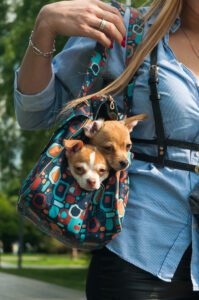
If you’ve read any of our past blogs, such our blogs on the key components to quality puppy training or teaching a dog to generalize a command, this advice may seem a little surprising! To be clear, we are not advising you to never leave the house with your puppy. In fact, socialization and early exposure to different situations is extremely important! However, it is also important to build in alone time for your puppy.
Crate Training
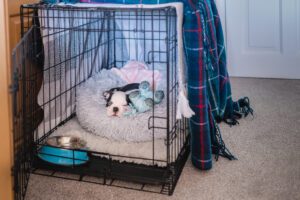
A crate is perhaps the most useful tool for preventing separation anxiety. As a reminder, a crate should always be a positive space for your puppy. Never use the crate as a punishment or force your puppy into the crate. Lure your puppy into the crate using a treat. You can increase positive associate further by feeding them meals in the crate or playing some crate games.
Baby Steps
Your ultimate objective is to teach your puppy it is okay, and sometimes even desirable, to be alone. You can start in very short intervals. Make sure your puppy has been fed, watered, and pottied recently. At random times throughout the day, get up and leave the room, closing the door behind you. You can start with only a few seconds. If your puppy behaves normally in your absence and does not cry, give them a treat upon return. You can work your way up to longer periods of time. If, on the other hand, your puppy struggles with this, you can first work on being “alone” in the same room.
NOTE: Ideally, this step should be executed with the crate. If you are not leaving your puppy in the crate, make sure that the area is thoroughly puppy-proofed!
Don’t Make Leaving a Big Deal
When your puppy is comfortable being left in a room and hearing you move around the house out of sight, progress to leaving the house. We know that it’s hard to leave your pup, even just for a few minutes, but resist the urge to make a big deal about leaving. Remain calm, casual, and quiet through the entire process. As with the previous step, start with leaving your puppy alone in their crate for a few minutes. You can eventually build up to several hours. Please note that young puppies should never be left in the crate for more than four consecutive hours.
Alone Time = Awesome Stuff Happens!
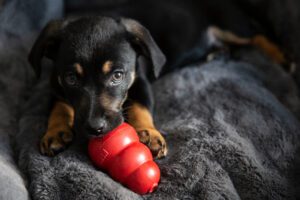
As you increase the duration of your time apart from your puppy from seconds to minutes to even hours, your puppy will need something to do. Now is a great opportunity for enrichment toys or treats. Food stuffed in a Kong, for instance, can keep a puppy occupied trying to retrieve the tasty treats. (Hint: try freezing it to make it last even longer!) You can also place their favorite (safe) toy in the crate with them. This all takes being alone from scary to tolerable – maybe even fun!