Arizona is a great place to live if you are the outdoors-y type. In the fall and winter, Arizona is home to some truly spectacular hiking trails. In Phoenix alone, you can find more than 200 miles of trails for any fitness level. During the spring and summer months, beat the heat with camping trips in northern Arizona. If you’re a dog owner, there are added benefits of providing excellent exercise and mental stimulation for your best friend. However, be prepared. Heading out of the urban jungle and into nature introduces both excitement and complications. This is your guide to hiking and camping with your puppy.
Work on the Basics First
Before you go hiking or camping, you should first work with your dog on obedience and leash manners. You’re likely to encounter other people, dogs, wildlife, and more. Having a foundation of communication with your dog, a solid recall, and some basic leash skills will go a long way toward making the experience safe and enjoyable for all involved.
Assess Your Dog’s Fitness Levels
Before you take your dog out on a hike or a camping trip, evaluate how much physical activity will be required against your dog’s fitness levels. Factors for this can include:
Age
Young adult and adult dogs are in the prime for outdoor adventures. Seniors and puppies, on the other hand, will need to engage in less strenuous hikes. Senior dogs may suffer from issues such as arthritis, reduced vision, and lower energy levels. Puppies, on the other hand, do not have as much stamina as older dogs. Additionally, their bodies are still growing. Exercise is good for your puppy, but overdoing it could lead to long-term damage to their joints.
Conditioning
Just as humans who spend every day sitting on the couch cannot suddenly jump up and run a marathon, so too will a sedentary dog struggle with a sudden level of demanding physical activity. If you want your dog to be able to accompany you on longer treks, start small and work your way up.
Breed
While you can work on acclimating your dog to more physical fitness, the fact is that some breeds are going to be more suited than others for extensive exercise. Breeds such as Labrador Retrievers, German Shepherds, or Australian Shepherds were bred with stamina in mind. Even some smaller breeds, such as Jack Russell Terriers or Miniature Schnauzers may surprise you with how rugged they can be! On the other hands, brachiocephalic breeds such as Bulldogs, Pugs, or Shih Tzus will not be a good match for a 20-mile hike. Greyhounds who are built for short spurts of speed or Great Danes and other extra large breeds are also not the best choices when it comes to long hikes. They can certainly tag along on camping trips, though!
Do Your Research
Before you embark, do some preliminary research. First and foremost, make sure that the hiking trail or camping ground you are eyeing up allows for dogs. (And if the answer is no, please respect this rule.) For camping, check also if there are any noise ordinances, especially if your puppy tends to be vocal. The very last thing that anyone wants is having to pack up early because your dog is a bit too barky.
For hiking trails, try to avoid trails with hazards such as steep climbs or bouldering. Ideally, dogs do best on trails that have plenty of shade to rest in and smooth terrain. That doesn’t mean there can’t be climbs and dips – in fact, that would take much of the fun out of hiking! However, sharp stones can be abrasive even on tough doggy foot pads. Your pup would much prefer a dirt trail to one made of gravel.
Identification
In the unlikely event that your puppy slips the leash while you’re on a hike or camping, you want to maximize your chances of a safe return home. Make sure that your dog’s microchip information is up to date. If your dog does not regularly wear a collar with information tags on it, strongly consider keeping one on them for the duration of your trip.
Medical Preparation
Make sure all of your puppy’s vaccinations are up to date. If this is a trail or campsite that is popular with other dog owners, your puppy is at risk for exposure to contagious disease. Having a rabies vaccination is also essential in case of encounters with wildlife. You may also consider additional vaccinations, such as a Leptospirosis vaccine, rattlesnake venom vaccine, and a Lyme disease vaccine if you’re going up north. Heartworm preventive or flea and tick treatment can stop your fun outdoor adventure from becoming a nightmare at home.
Outside of medications, familiarize yourself with signs of heatstroke or heat exhaustion. Be prepared to take breaks to allow your dog to rest and drink water. Finally, if you’ll be using a tent, be sure to trim your puppy’s nails. You would not believe how easily those little claws can puncture tent fabric!
Gear Up
Make sure to bring the right gear with you. There are a lot of really cool gadgets for hiking and camping that may enhance your experience. At the bare minimum for a hike, you will need:
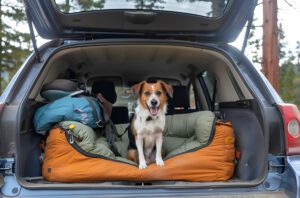
- Water (and plenty of it!)
- A collapsible water dish, dog water bottle, or other container for your dog to drink from
- A leash
- A collar or harness
- Poop bags
Other items to consider bringing with you on a hike include:
- Food and food bowl (becomes an essential for an overnight trip or a walk of more than a few hours)
- A dog first aid kit
- Treats
- Reflective or light up collar and/or leash
- Dog boots to protect their paws
- A pack for them to carry their own gear (for adult dogs)
In the case of camping, you’ll want to pack a few extras, such as:
- Toys
- Bedding
- Towels in case of swimming or rain (nobody likes a smelly, wet dog!)
- Extra dog food
- A coat/sweater during the winter if low temperatures are expected
Practice Etiquette
Keep Your Dog on a Leash
The desire to allow your dog off-leash can be sorely tempting, and you may see other people doing so. Unless you have an iron-clad recall, please do not allow your dog off-leash. Keeping your dog nearby protects them from hazards such as toxic plants they may ingest, dangerous off-trail areas, or other animals. If your dog is trained enough to be off-leash, to still plan on having them on leash in more trafficked areas. Remember, your dog may be friendly, but that may not be the case for other dogs you may meet. Also, while your dog may want to meet everyone, not everyone will want to meet your dog due to allergies, phobias, or even simple preference.
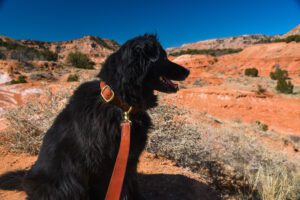
Keeping your dog on a leash also limits their ability to bother local wildlife. Your dog may have been bred to chase down prey, but in the modern age, it is kinder to leave them alone. It also stops your puppy from becoming a little too curious about animals they would be better off leaving alone, such as skunks, rattlesnakes, porcupines, or bears. Be respectful of the inhabitants as you pass through their home.
Clear the Path When Needed
You may at times need to step aside for other groups, bikes, or even horses. When you do, make sure that you and your dog stand outside of sniffing distance and keep your dog secured by the collar or harness.
Pick Up After Yourself
If your puppy poops while you’re on the trail, please pick up and bring the bag with you. Even if the bag is biodegradable, do not leave it behind. Keep the environment beautiful for everyone.
Stick to the Buddy System
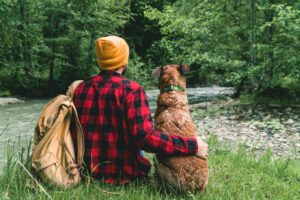
Last of all, for the duration of your trip, do not leave your dog unsupervised. Even a well-behaved dog can end up lost, sick, or hurt if allowed to wander freely. If you leave your dog tied up or in a crate, this could render them vulnerable to wildlife or weather changes. Besides, this is a great bonding opportunity for you both! Stick together and make the most of your time in the great outdoors!