For those of you considering a puppy or who have recently adopted, here’s a word of warning – puppies bite, and those little puppy teeth are sharp! If your new little buddy has you questioning whether you’ve adopted a puppy or some sort of sentient bear trap, don’t panic. Not only is this “landshark” phase a perfectly normal part of puppy development, but you and your pup can get through this phase with all limbs (relatively!) intact. Here’s how to stop puppy biting.
Why do puppies bite?
The first and most important thing to know is that your puppy is not biting you out of malice. Just as a puppy’s primary way of perceiving the world is through its nose, your puppy’s primary way of interacting with the world is through its mouth. Puppies do not have hands. If your puppy is biting or chewing on you, it’s probably for one of these reasons:
Teething
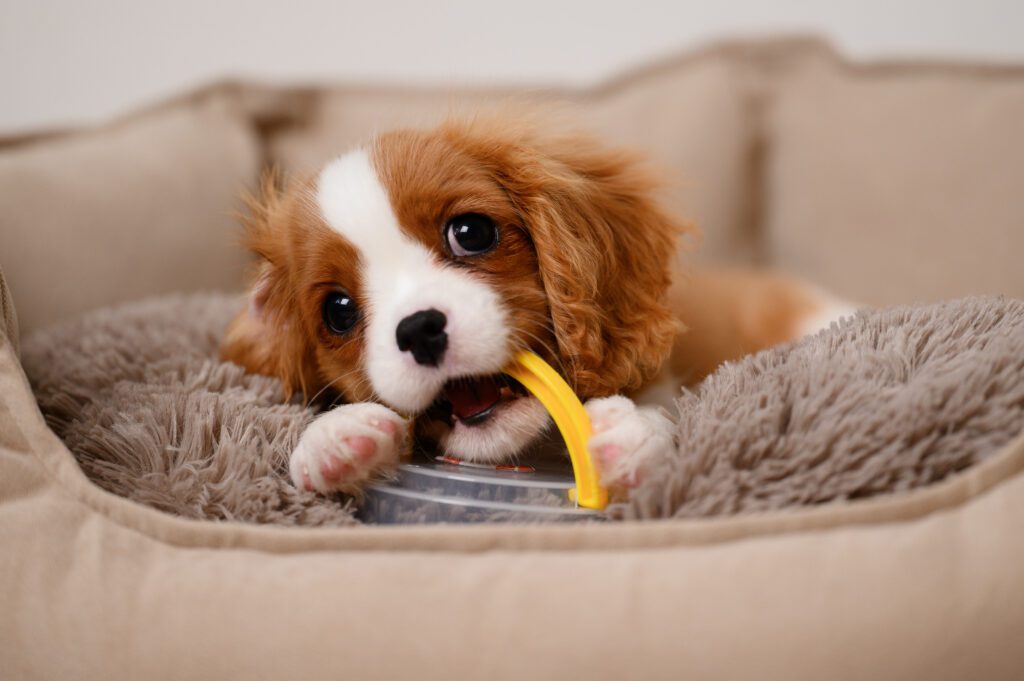
Adult teeth start to grow erupt around 3-4 months of age. This is very uncomfortable for your puppy, and chewing helps to soothe the soreness. By the time that your puppy is finished teething by six months, many will have discovered that chewing is an enjoyable activity and will continue this habit. Certain breeds, such as Great Danes, Mastiffs, or Labrador Retrievers, are known to be heavier teethers than others. Keep plenty of chew toys handy!
Play
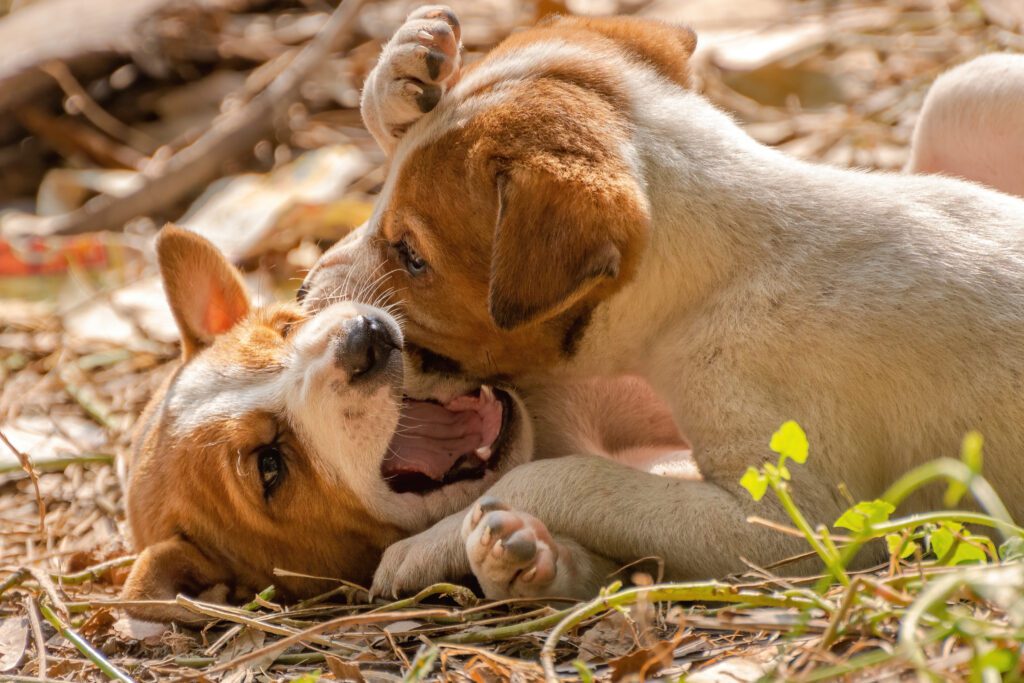
Nipping is a normal part of how puppies play with one another. This is one of the many reasons that it is important to keep puppies with their littermates and mothers until they reach eight weeks of age. As they play with their littermates, puppies learn the basics of bite inhibition. If ever a puppy bites another one too hard in play, they will respond with a yelp to tell them “ow! That was too hard!”
Communication
Aside from the bites that are a part of play, your puppy may be expressing that they are overstimulated, frustrated, or bored. Any animal of any age may also bite if sufficiently scared, hurt, startled, or sick, though this type of bite is rare in young puppies.
Prey Drive
Prey drive is a dog’s natural instinct to chase and hunt. As descendants of wolves, all dogs have some degree of prey drive, but certain breeds (such as terriers, herding dogs, or hunting dogs) have a more prominent prey drive than others. If your puppy catches a quick flash of your ankles going around the corner, this may activate that piece of their brain that tells them to pounce on a rabbit.
Accident
Puppies’ bodies are still growing and they’re still getting to know the world. If you’re holding an exciting toy or a tasty treat, your eager puppy may misjudge and end up chomping down on your hand by mistake.
If puppy bites are normal, should I just ignore it?
In a word, no. Aside from the fact that waiting will be a trial for your hands and feet, your puppy will continue to grow up but may not grow out of the habit. Cute little puppy nibbles can be much more serious coming from an adult dog, especially if they have not learned the difference between playful and painful biting. Moreover, in the state of Arizona, any dog (regardless of vaccination status) that bites a human and draws blood is legally subject to a ten-day quarantine as a rabies prevention measure. The best way to protect both your puppy and others is to nip the habit in the bud.
Preventing Puppy Bites
Before diving in to teaching your puppy not to bite, you can first set your puppy up for success.
Structure
Puppies thrive on structure and routine. Creating a consistent schedule of playtime, meals, training, and resting times will help your puppy understand expectations and boundaries.
Don’t Give Too Much Freedom
A puppy with the zoomies running all over the house is the prime culprit for overexcited nipping. Having an exercise pen for your puppy for burning off energy or resting is essential. As your puppy grows up and learns the rules of the house, you can allow them more freedom.
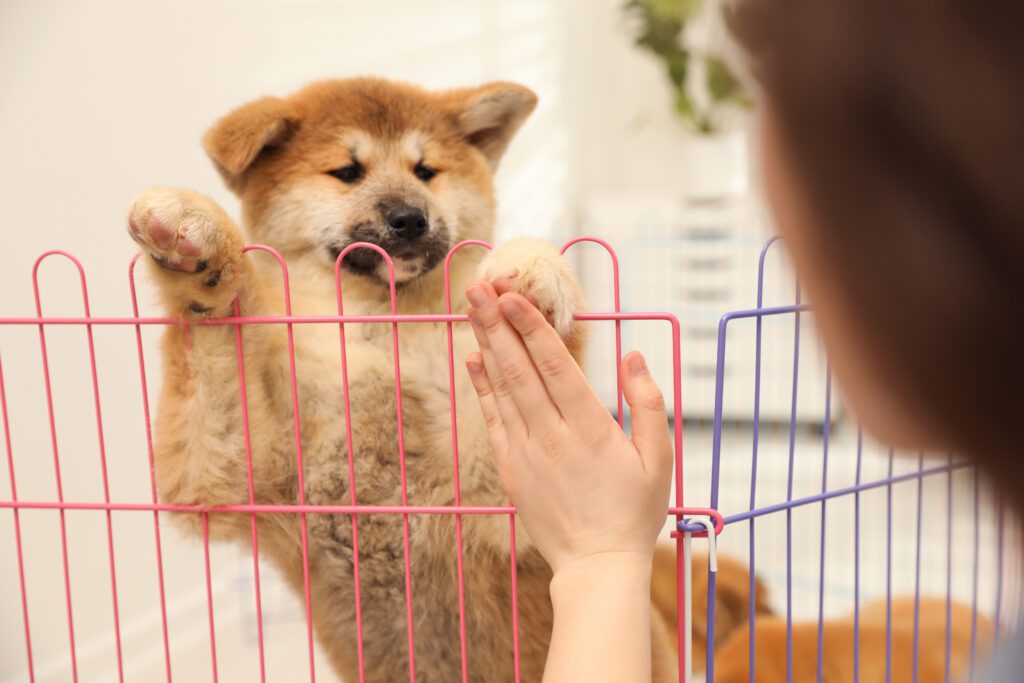
Stay Off the Floor
For a human, sitting or laying down on the floor with a puppy is a sign that you are resting together. For a puppy, they see this as an invitation to play! Stay on your level as you engage with your puppy.
No Roughhousing
Your puppy thinks of its family as packmates. Roughhousing is a normal part of puppy-to-puppy play, but puppies need to learn that playing with humans is different. Engage with your puppy in other, non-contact forms of play.
Hands and clothes are not toys
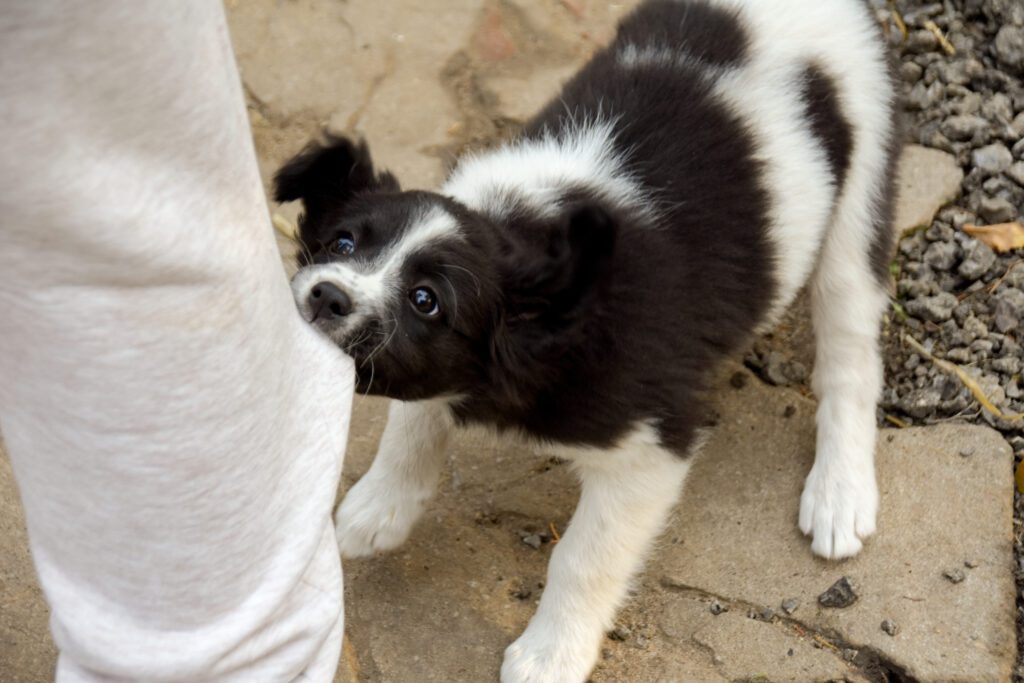
Do not allow them to play with hands or clothing parts sometimes and other times scold your puppy for biting or pulling on them. Avoid wiggling your fingers in your puppy’s face or bat at their face as a part of play. Inconsistency is confusing for your puppy. Clear enforcement of the rules helps your puppy understand what is acceptable behavior.
Read Your Puppy’s Mood
Understanding canine body language lets you gauge your puppy’s mood. Your puppy is most likely to be mouthy when they’re feeling playful, bored, overwhelmed, grumpy, or startled. While having a schedule is important, it is also important to meet your puppy in the middle. If you are wanting to cuddle on the couch and your puppy is looking to play, taking them to a different area to work out some of the wiggles first will make the experience more enjoyable for you both.
Teaching Your Puppy Not to Bite
Teaching your puppy not to bite has two major components, though they are taught together. The first is teaching bite inhibition. Bite inhibition is your puppy’s control over how hard they bite. The other is teaching your puppy the rules and helping them learn better habits.
Bite Inhibition
Just as playing puppies let each other know when they’ve bitten too hard, teach bite inhibition by giving your puppy feedback. Choose a correction word, such as “gentle” or “no.” If your puppy nips you while you are playing, freeze or let your hand go limp. Try to resist the urge to pull away, as this may trigger your puppy’s chasing instinct or make it seem like part of the game. Deliver your correction word in a firm, even tone.
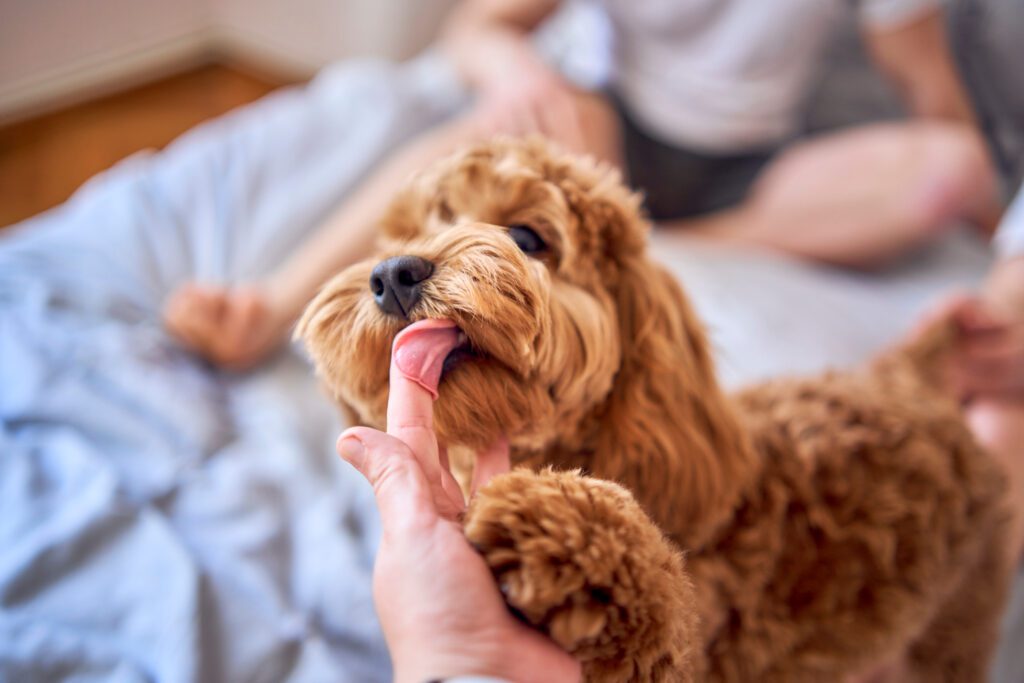
Some resources recommend making a high pitched noise or yelping when a puppy bites. The theory is that this is the clearest version of communication, since it is what a fellow puppy would do. Whether this proves effective varies from puppy to puppy. Some respond to it well; for others, you have just become a human squeaky toy, and their excitement only increases. Using a stern correction word is a safer bet.
Redirection
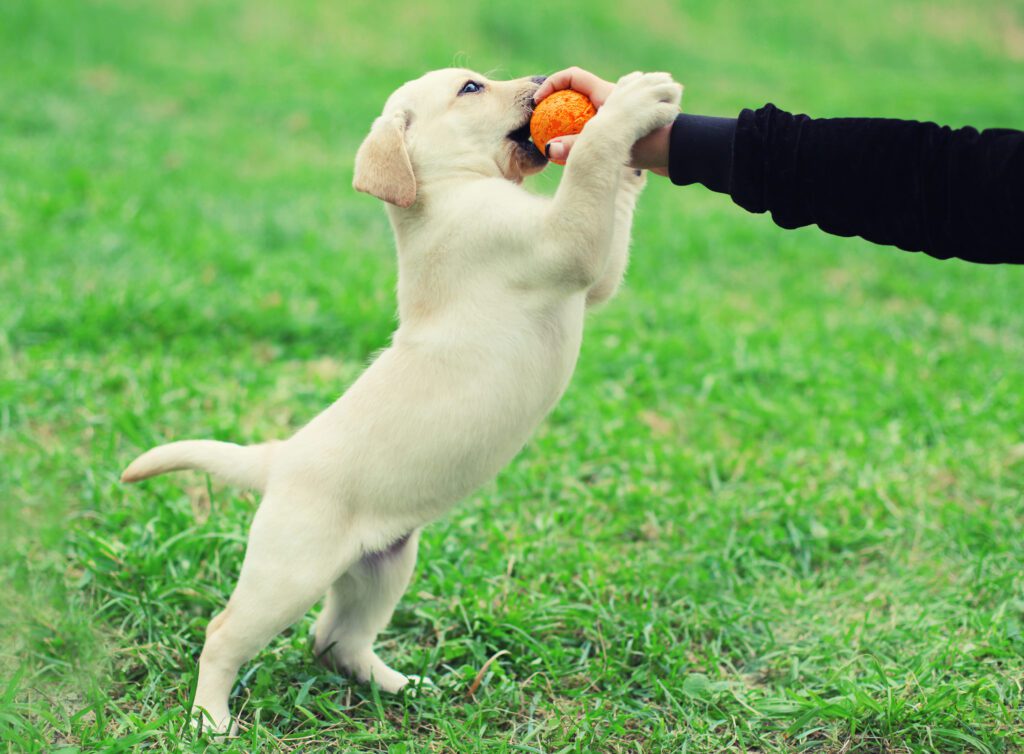
After about thirty seconds of no interaction with your puppy, offer them a toy instead. This teaches your puppy that if they bite human skin, the fun stops, but biting a toy is acceptable. Make sure that the substitute that you are using is a satisfying experience for your puppy. A tug toy may be more fun than a game of fetch, or a tasty chew stick is a more enticing alternative than plain rubber. What a puppy values the most varies on an individual basis. Take the time to get to know your puppy and keep their favorite toy close to hand. Most of all, do offer that toy from time to time outside of a redirection. The last thing we want your puppy to learn is biting you is the only way to access the good toys!
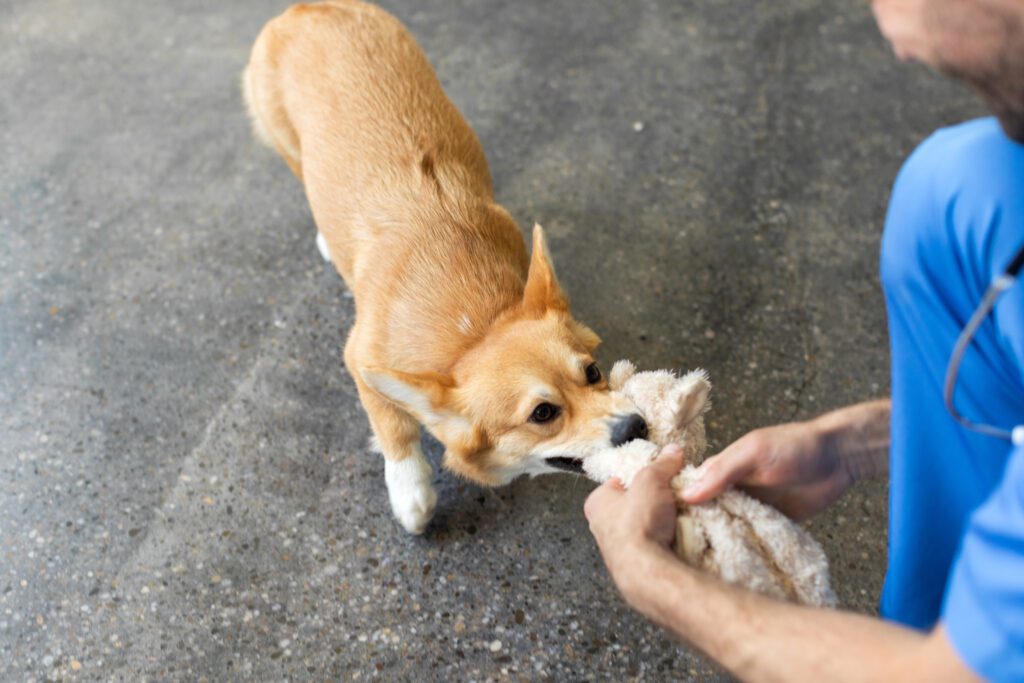
If your puppy persists in biting you after correction and redirection, place them in time out. Time out can be short, simply picking them up for about a minute and letting them hang in the air. Time out can also be longer by placing them in their exercise pen and leaving the room. This gives your puppy some time to calm down. Remember also that one of the reasons a puppy may bite is if they are overtired. Your fussy, furry toddler may simply need a nap.
Additional Tips
The combination of correction and redirection can be used outside of play. For instance, if your puppy nips at your heels while you walk, freeze to remove the stimulus and then redirect to a toy. Similarly, if you find your puppy chewing on something they are not supposed to, interrupt them with a correction word or a startling noise, then substitute with an acceptable chewing alternative.
Working with your puppy on impulse control can also be helpful. Try teaching them the “no mugging” game. Consistent obedience training such as learning to sit and stay also builds impulse control. Take the time to occasionally “capture calmness” by quietly giving your puppy a treat when they are relaxing in their crate or entertaining themselves with a chew toy. Rewards reinforce being calm as a desirable state.
Finally, don’t forget that a puppy’s mouth is their main way to interact with the world. Expecting perfection may not be realistic or fair. Your primary goal is to teach them that there are better alternatives to chew on, reduce mouthiness to a bare minimum, and to make sure your puppy understands bite inhibition. With some practice and patience, your landshark can retire to being a landguppy instead!
More blog posts you may enjoy:
A tired puppy is a good puppy! Learn how to burn off excess energy with our post on How to Tire Out Your Puppy.
How much sleep do puppies need, anyway? Your Guide to Puppies and Sleep has all the answers.
Learn how to effectively teach your puppy. Uncover canine cognition with this blog post on How Dogs Learn.