Your dog being injured while you’re on a hike is the sort of thing most people imagine happening somebody else… right up until it happens to you. In a perfect world, every outing would be smooth from start to finish. In reality, accidents happen. If your dog sustains an injury while you’re out and about, arm yourself with the right supplies and knowledge to tackle the situation. Here is a basic rundown of dog first aid on the go.
Dog First Aid Kits
Whether this is a human-only excursion or you’re bringing along your pup, taking a first aid kit with you when you go on a hike or on a camping trip is a wise idea. While many items in your first aid kit are applicable to both humans and dogs, there are still some extra items to consider including that are just for your four-legged friend. There are a lot of premade dog first aid kits out there at varying price points. (This kit by Adventure Medical Kits contains supplies for both you and your dog!) If you’re looking to add to an existing first aid kit or to build one from scratch, we’ve included a list of some items below.
For day trips when you’re traveling light, your kit should include:
- Sterile gauze
- Self-adhering bandages (also known as VetWrap or Coban)
Self-adhering bandages are recommended because it is will not take off hair when removed - Antibiotic wipes, spray, or ointment
Flush and clean wounds to prevent infection. Do not use these around the eyes. Please note that not all antibiotic substances that are safe for humans are safe for dogs, so double check before you include it in your kit. Veterinary ointment is preferable because it is safe in ingested.
- Scissors (blunt tip recommended)
Useful for trimming gauze, bandages, or tape. Also can be used to trim back hair around a wound for better visibility.
- Styptic powder or gel (also known as Kwik Stop)
Styptic powder stops minor bleeding and is useful for broken nails. It is available in multi-use containers, but you can also include single-use swabs in your kit to limit space needs
- Nail trimmers
Breaking a nail or catching it on something is one of the most common dog injuries - Tweezers
Helpful for removing any thorns, stingers, etc. In the case of ticks, TickKeys also come highly recommended, though not as versatile as tweezers
- Soft muzzle
Any animal can bite if sufficiently hurt or scared. It has nothing to do with how much or little that they love you. Having a muzzle on hand gives you an option for the sake of safety. The last thing that anyone needs is for both you and your dog to end up injured. Make sure that you get the right size for your dog, and learn in advance how to properly apply it.
- Disposable gloves
Both protects your dog from any contaminants on your hands and keeps you safe. Make sure to take these with you when you leave! No littering!
- Small bottle of isopropyl alcohol or alcohol wipes
For sterilizing the gloves after putting them on
- Any daily medications your dog is taking
- A copy of your veterinarian’s information and/or 24/7 emergency vet phone number
- A dog first-aid field guide
While we offer some advice on minor common problems you may encounter while hiking or camping, if a true medical emergency arises, your ability to help your dog should not rely on finding a cell signal. Having a copy of a book written by a licensed veterinarian on hand could mean the difference between getting your dog safely to a vet or not. These two books are among the most recommended for being helpful without being too bulky. You can also download an ebook on your phone in advance.
For overnight trips or if you’re looking for some more robust emergency preparedness, some additional items to consider are:
- Thermometer
Having a rectal thermometer or under-armpit thermometer on hand is helpful for determining if your dog is ill. Remember that dogs naturally run hotter than humans (between 100° F and 102° F) - Sterile Saline
While clean water will do in a pinch, sterile saline is the best choice for flushing wounds or eyes
- Inflatable Elizabethan Collar
Keeps dogs from tearing off bandages or worrying at their wound
- Benadryl
Can be used to reduce allergic reactions. Consult with a veterinarian on proper dosage before giving it to your dog.
- Hydrogen Peroxide
Can be used to induce vomiting if you believe that your dog has ingested something toxic. Consult a vet before inducing vomiting if at all possible.
- Syringe without Needle
Can be used to flush dirt and debris from wounds or eyes. Also useful for administering oral medication to your dog
- Instant Ice Pack
- Insect Sting Stop Pads or Benadryl Sticks
Not to be confused with insect repellant wipes (though these would also be useful!), insect sting relief wipes can temporarily alleviate pain and swelling from insect bites or stings. Benadryl sticks can reduce itchiness from bites.
- Magnifying Glass
- Flashlight (with working batteries)
- Extra Leash & Collar or Slip Lead
- Collapsible Water Bowl
- Towel or Blanket
- Treats
- Water
Common Minor Medical Issues
You and your puppy now have almost everything that you need to deal with minor medical problems that you may encounter on your adventure. The only thing you may be missing? The knowledge of how to use these supplies! Here’s what you need to know to tackle some of the most common problems.
General Emergency Preparedness
Remember to keep calm and remove both yourself and your pet from any additional danger before you begin treatment. Speak to your dog in soothing tones. Do hesitate to use the muzzle if needed. It is better for your dog to be momentarily uncomfortable than to end up with a wound of your own. Your first steps should always be to safely restrain your dog and to put on disposable gloves.
Heat Exhaustion and Heat Stroke
Living in the desert, the risk of overheating is always going to be the most pressing concern for all living creatures. Familiarize yourself with the symptoms of heat stroke and how to handle it in our article Dog Heat Stroke Symptoms: Symptoms, Causes, and Treatment.
Minor Cuts or Abrasion
- Trim the hair back if needed for a better view of the wound. Flush the wound with saline solution or clean water to remove any dirt or debris.
- If the cut is still bleeding, apply clean gauze with pressure until bleeding stops. If bleeding does not stop after a few minutes or if it is bleeding heavily, firmly wrap to maintain pressure and contact a vet at your first opportunity.
- Apply pet-safe antiseptic to the cleaned wound.
- Apply clean gauze and bandages to the wound, then use self-adhering bandages to bind the gauze in place. Do not wrap too tightly if the wound is on an extremity.
- If the cut is large, is near to the eyes, nose, mouth, genitals, or anus, seems like it may need stitches, or is the result of a bite from another animal, bring your dog to the vet as soon as possible. If the wound is minor, schedule an appointment with your vet within a few days.
Broken Nails
- Clean the nail with water or saline
- If a piece of the nail is hanging, gently trim it away with your nail clippers. However, only attempt this if the piece of nail is only thinly attached and if your dog is restrained, as this can be painful.
- If the nail is still bleeding, apply styptic powder. If bleeding continues, contact your vet.
- Follow instructions in the above minor cut section for cleaning and bandaging the wound
- In the case of a minor broken nail, they may be safely able to heal at home. If the nail is split all the way to the base, you cannot safely remove the section of broken nail, or you notice any signs of infection, bring your dog to the vet.
Remove a Tick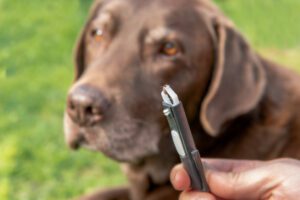
While less common in the desert, we still get ticks in Arizona, especially up north. If you and your dog have been adventuring in the woods, check them (and yourself!) carefully for ticks. They can hide places like inside ears, under collars, or between toes, so be sure this is a thorough inspection.
- If you find a tick on your dog, use a pair of tweezers to grasp the tick at the base of the head. Don’t use your fingers!
- Firmly but slowly pull back on the tick. Do not pull back sharply, as this may cause the tick’s head to break off in your dog’s body.
- If you successfully remove the tick in one clean piece, rinse the area with saline or water, then apply antiseptic. If a piece of the tick breaks off in the dog, this could be a source of infection. Still rinse and sterilize the area, but be sure to schedule an appointment with your vet.
- Consider screening your dog for tick-borne diseases, such as Lyme disease or Rocky Mountain Spotted Fever.
A Final Note on First Aid
While first aid is useful for helping your dog in the moment, we recommend any dog who has sustained an injury to visit a veterinarian. A vet will be able to evaluate the condition and determine if any further treatment, such as antibiotics, will be needed.
✓ This article has been reviewed by Animal Kingdom’s expert team to ensure accuracy and reliable pet care guidance.