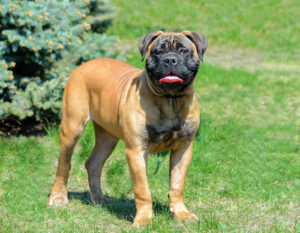
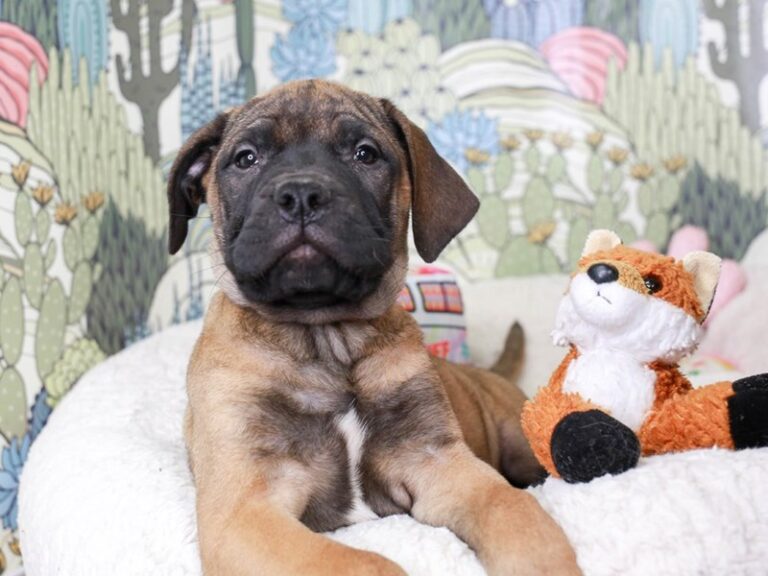
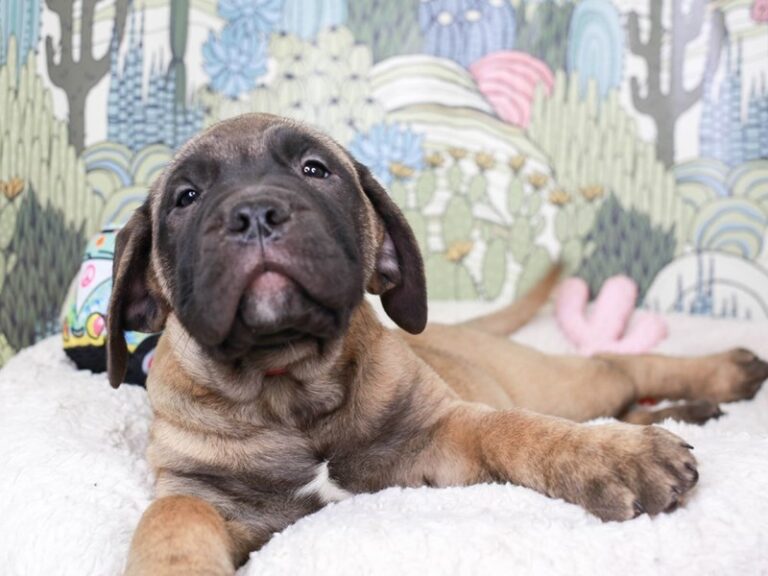
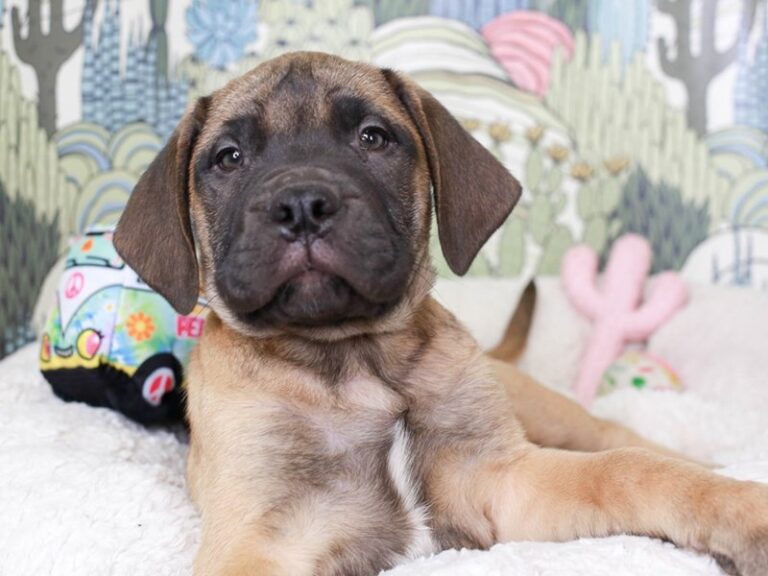
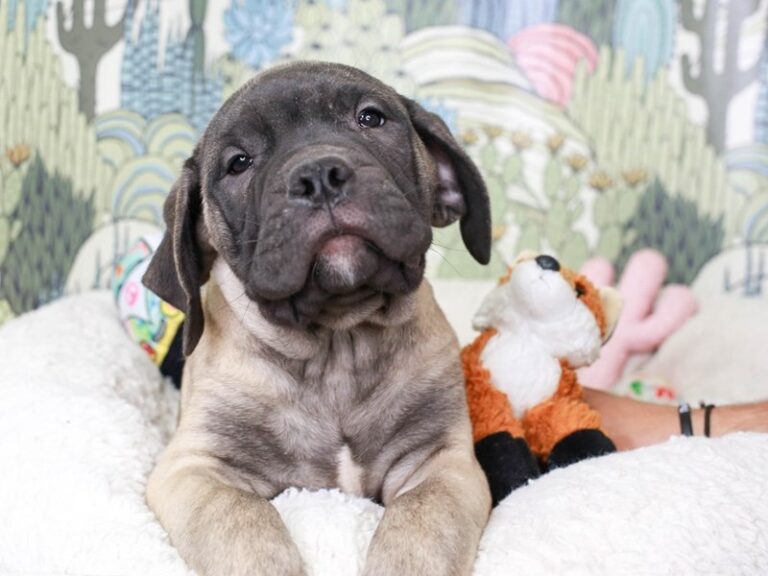
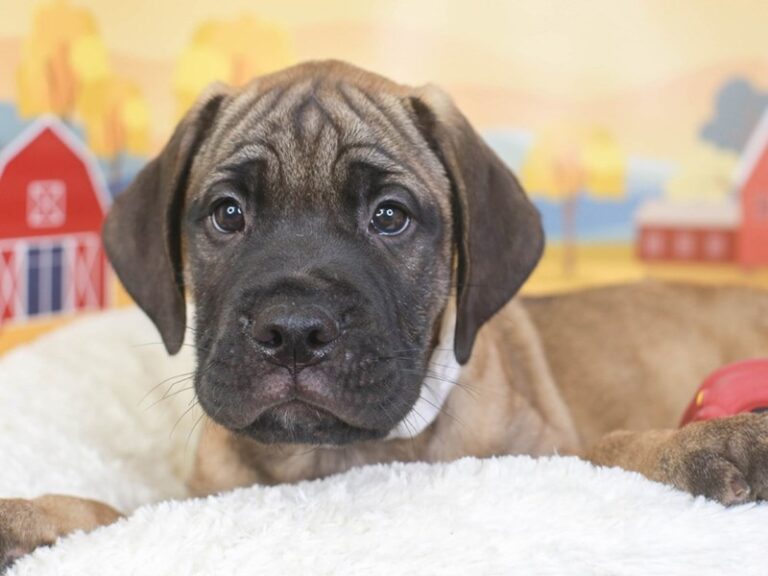
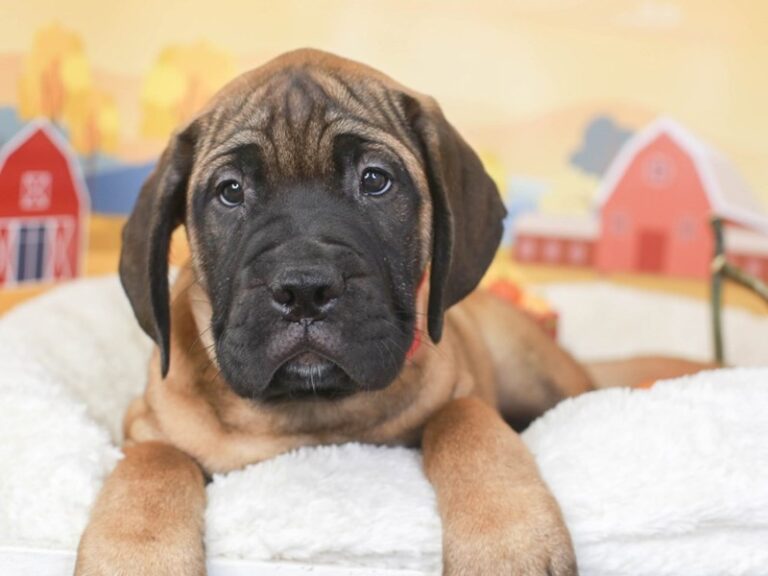
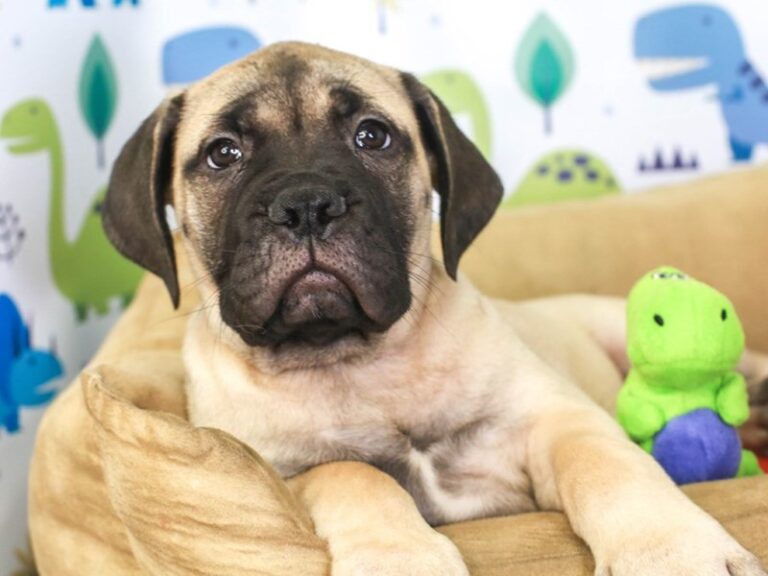
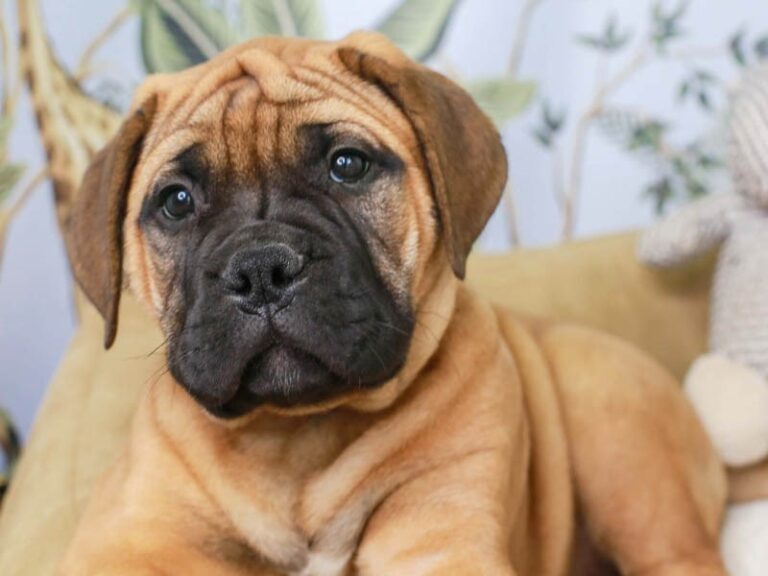
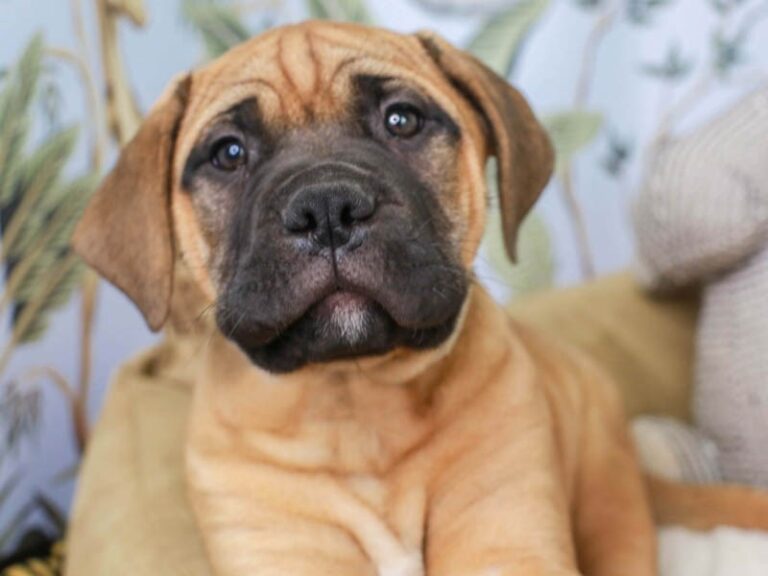
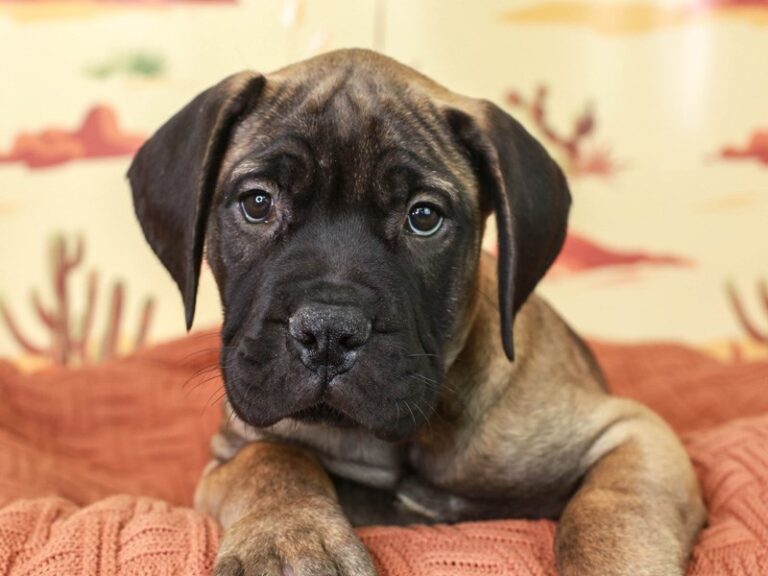
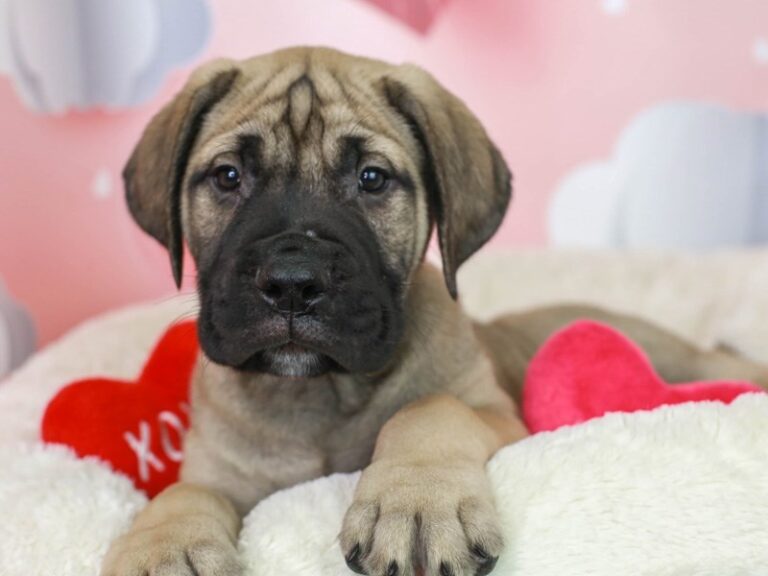
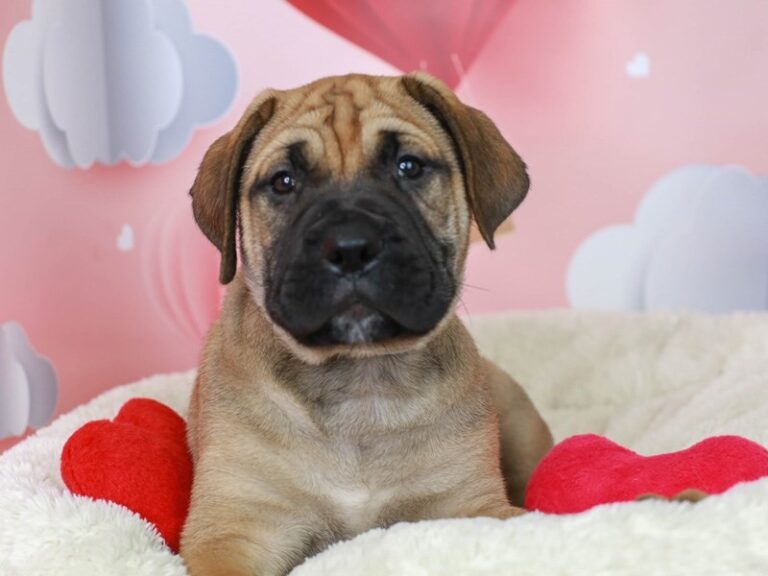
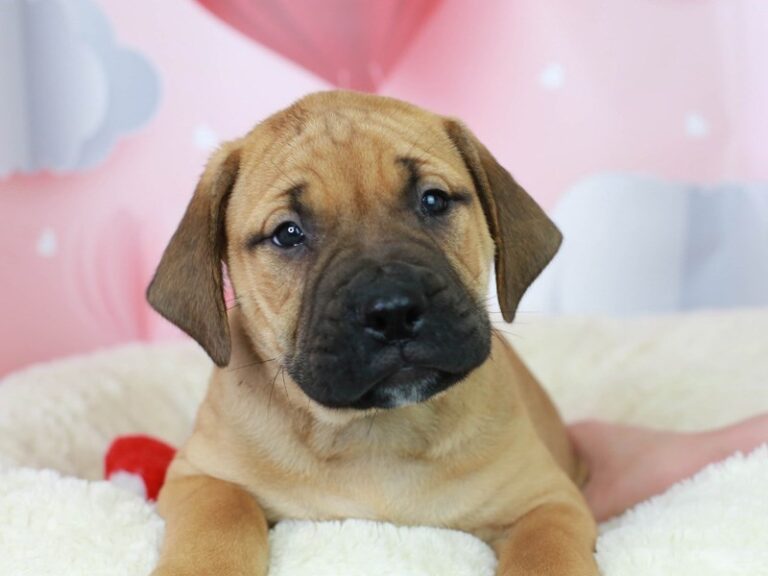
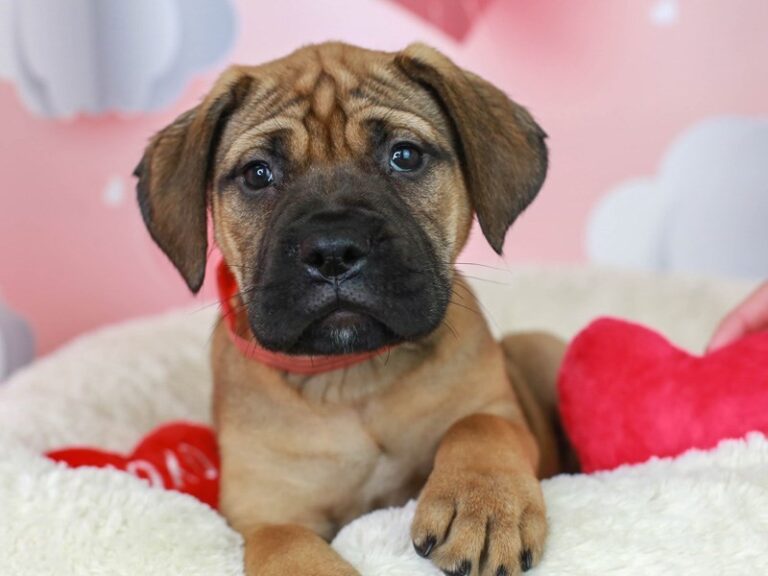
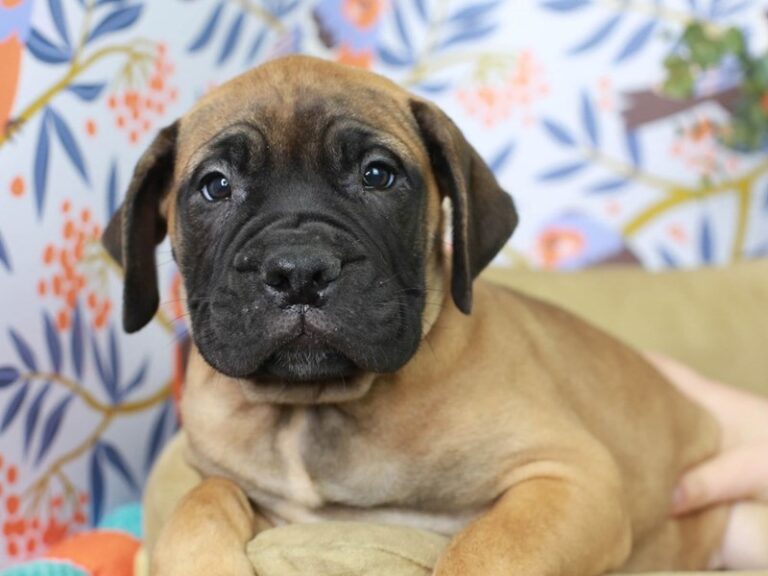
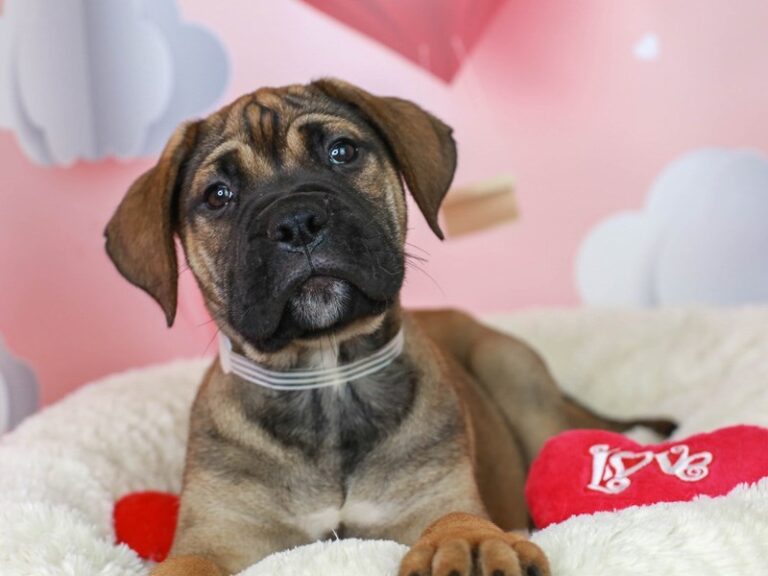
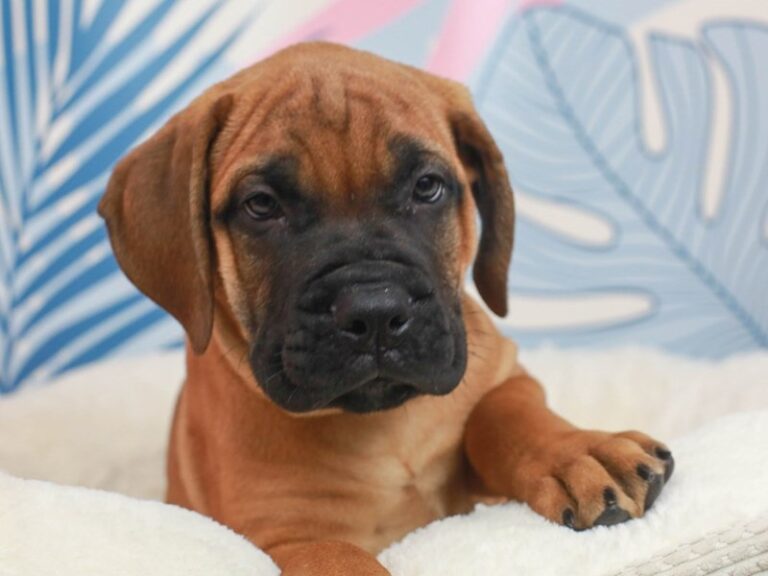
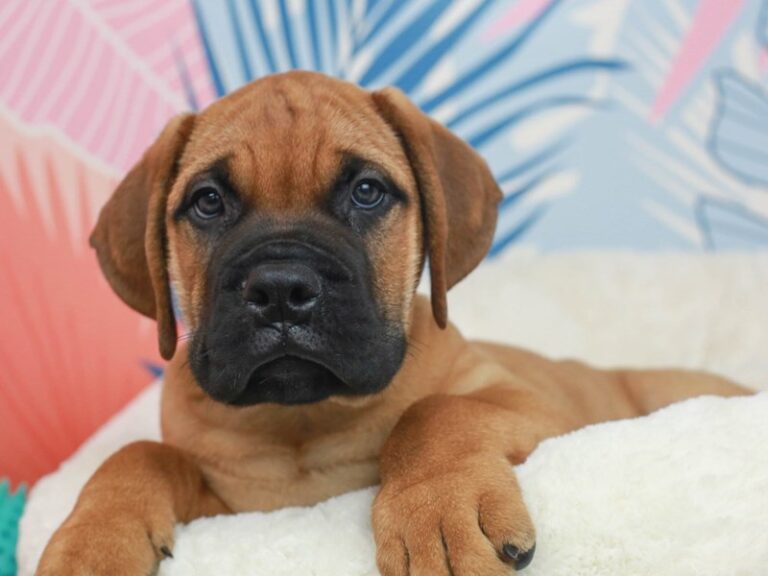
These dogs can be affectionate and playful with the people they know and trust. They often form strong bonds with their owners and enjoy being included in family life.
Breed Characteristics
- Breed Group: Working Group
- Height: 24–27 inches
- Weight: 100–130 pounds
- Life Expectancy: 7–9 years
- Coat: Short, dense, and smooth
- Colors: Fawn, red, or brindle, typically with a black mask
- Temperament: Loyal, protective, affectionate, calm, confident
- Energy Level: Moderate
Intelligence & Trainability
Bullmastiffs are intelligent dogs, although they can sometimes be independent or strong-willed. Early training is particularly important because a small puppy eventually becomes a very large and powerful adult.
Positive reinforcement, consistency, and patience are effective approaches. Training should focus on basic obedience, leash manners, socialization, and appropriate interactions with people and animals.
Starting early makes it easier to establish good habits before the puppy reaches its full adult size.
Exercise Needs
Bullmastiffs have moderate exercise requirements. They enjoy regular activity but generally do not require the same level of intense exercise as highly athletic breeds.
Good activities include:
- Daily walks
- Gentle games of fetch
- Short play sessions
- Obedience training
- Supervised outdoor activities
- Interactive enrichment
Puppies should receive age-appropriate activity and should not be encouraged to participate in excessive jumping or strenuous exercise while their bones and joints are developing.
Living Environment
Bullmastiffs can adapt to different home environments as long as their basic needs are met. Despite their size, they are often calm indoors and enjoy having a comfortable place to relax near their families.
They do best in homes where they can:
- Live indoors with their owners
- Receive daily walks
- Have enough space for their large bodies
- Follow a consistent routine
- Receive regular training and socialization
A securely fenced yard can provide additional space for supervised activity, but it does not replace daily walks and family interaction.
Bullmastiff Puppies & Children
A properly socialized Bullmastiff can be a loving and dependable family companion. Their calm nature can make them a good fit for families with older children who understand how to interact appropriately with a large dog.
Because Bullmastiffs become extremely strong as adults, children should be taught to respect their personal space and avoid disturbing them while they are eating or resting.
Young children should always be supervised around Bullmastiff puppies and adult dogs.
Is a Bullmastiff Puppy Right for You?
A Bullmastiff puppy could be a great match if you’re looking for a dog that is:
- Loyal and devoted
- Naturally protective
- Calm around the home
- Affectionate with family members
- Confident and courageous
- Moderate in exercise needs
However, owning a Bullmastiff requires preparation for the responsibilities of caring for a large and powerful breed. Early training, proper socialization, regular veterinary care, and responsible handling are essential.
Frequently Asked Questions
Are Bullmastiff puppies good family pets?
Yes. Bullmastiffs can be devoted and affectionate family companions when properly socialized and trained. Their large size means families should establish appropriate boundaries early.
Are Bullmastiffs aggressive?
Bullmastiffs are naturally protective and may be reserved around strangers. Proper socialization and training help them develop into confident, controlled dogs without encouraging unnecessary aggression.
Are Bullmastiffs easy to train?
Bullmastiffs are intelligent but may have an independent side. They respond best to patient, consistent training using positive reinforcement.
How much exercise does a Bullmastiff need?
Bullmastiffs generally have moderate exercise needs. Daily walks combined with short play and training sessions can provide appropriate activity for most adults.