Personality
Olde English Bulldogges are generally loyal and affectionate dogs that enjoy being part of family life. Many form strong bonds with their owners and appreciate plenty of attention and companionship.
Their confident nature can make them alert and self-assured, while their playful side often makes them entertaining family dogs. Individual temperaments can vary, so early socialization is important.
Exposing an Olde English Bulldogge puppy to different people, environments, sounds, and appropriately introduced animals can help build confidence and encourage good social behavior.
Breed Characteristics
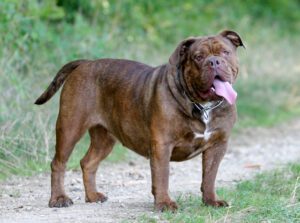
- Breed Type: Bulldog breed
- Height: Approximately 16–20 inches
- Weight: Approximately 50–80 pounds
- Life Expectancy: Around 9–14 years
- Coat: Short, smooth, and easy to maintain
- Colors: Brindle, white, fawn, red, black, and various combinations
- Temperament: Loyal, confident, affectionate, friendly, courageous
- Energy Level: Moderate
Intelligence & Trainability
Olde English Bulldogges are intelligent and can learn basic commands and household routines with consistent training. Their independent side may sometimes require patience and motivation.
Positive reinforcement using treats, praise, toys, and play can help keep training productive.
Early training should focus on:
- Basic obedience
- House training
- Leash manners
- Recall
- Impulse control
- Socialization
- Appropriate greeting behavior
Because of their strength and muscular build, teaching good leash manners and calm behavior from an early age is especially important.
Grooming Requirements
The Olde English Bulldogge’s short coat is relatively easy to maintain.
A basic grooming routine may include:
- Weekly brushing
- Bathing when needed
- Regular nail trimming
- Ear cleaning
- Routine dental care
- Checking skin folds when present
Regular grooming and skin checks can help identify irritation, redness, or other problems early.
Starting grooming and handling routines during puppyhood can help the dog become comfortable with routine care.
Olde English Bulldogge Puppies & Children
Olde English Bulldogges can be affectionate and loyal family companions when properly trained and socialized. Their sturdy build and playful personalities can make them enjoyable companions for active families.
However, their strength means they can accidentally knock over small children during excited play. Children should be taught to interact respectfully and avoid rough handling.
Young children should always be supervised around Olde English Bulldogge puppies and adult dogs.
Early socialization can also help puppies become comfortable around other dogs and household pets.
Is an Olde English Bulldogge Puppy Right for You?
An Olde English Bulldogge puppy may be an excellent choice if you’re looking for a dog that is:
- Loyal and affectionate
- Confident and sturdy
- Playful and family-oriented
- Moderately active
- Strong and athletic
- Devoted to its owners
Prospective owners should be prepared to provide consistent training, regular exercise, socialization, and attentive care. Because of their strength and bulldog-type characteristics, responsible ownership and careful health management are particularly important.
Frequently Asked Questions
Are Olde English Bulldogge puppies good family pets?
They can be affectionate and loyal family companions when properly socialized and trained. Their size and strength mean children should always interact with them under appropriate supervision.
Are Olde English Bulldogges easy to train?
They are intelligent and can learn well with positive reinforcement. Consistency, patience, and early obedience training are important.
Do Olde English Bulldogges shed?
Yes. Their short coats shed, but grooming requirements are generally straightforward. Regular brushing can help remove loose hair.
How much exercise does an Olde English Bulldogge need?
They generally have moderate exercise needs. Daily walks, supervised play, and mental stimulation can help keep them healthy and satisfied.
Are Olde English Bulldogges good with children?
They can be good family companions, particularly when raised with proper socialization and training. Because of their strength and energetic play, young children should always be supervised.
Do Olde English Bulldogges get along with other pets?
With early socialization and appropriate introductions, many can live successfully with other dogs and household pets. Individual temperament and prey drive can vary.