Why are some dogs considered hypoallergenic and some dogs aren’t? If I have allergies, are dogs out of the picture for me? Do hypoallergenic puppies shed? If you’re considering adopting a dog, these may be questions you are considering. At Puppies ‘N Love and Animal Kingdom, we’re here to help demystify this process. This is your guide to hypoallergenic puppies.
What makes a dog hypoallergenic?
One of the most common misconceptions about pet allergies is that allergies are caused by pet hair. Pet allergies are most commonly triggered by dead skin cells (dander) or saliva. Because all dogs shed dander to some degree and all dogs have saliva, there is no such thing as a completely allergen-free dog. Even hairless dogs can cause allergies!
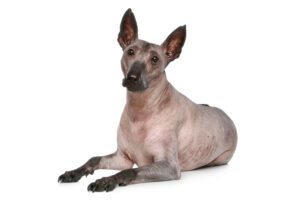
That said, that does not mean that all individuals with dog allergies are doomed to a cold, canine-free life. Hypoallergenic puppies are breeds that are least likely to cause an allergic reaction. For a dog to be considered hypoallergenic, that means that they are a breed that sheds minimal dander and has a low propensity for drooling. Many hypoallergenic dogs also have fur instead of hair.
What’s the difference between fur and hair?
When it comes to dogs, fur and hair can seem the same at a glance. Both hair and fur are made of keratin cells and they both exist to keep a dog warm and protect their skin. The difference lies in the genetic preprogramming of these cell’s behavior. Fur grows to a predetermined length and then stops and eventually falls out. Consider a Labrador Retriever and a Golden Retriever. Both of these dog breeds have fur that have different predetermined lengths.

Hair, on the other hand, will continue to grow nearly indefinitely. They lose hair at about the same rate that humans do; that is, occasionally one or two, but most of the hair stays put. This is why dogs with hair shed less than dogs with fur. This is also why dogs with hair need to be regularly brushed and trimmed to avoid mats.
So are all hypoallergenic dogs low-shedding or non-shedding?
Generally speaking, yes – but with one notable exception! Samoyeds are sometimes included on the list of hypoallergenic dogs. These beautiful, fluffy pups were specifically bred to avoid drooling (giving them their trademark “Sammie Smile”), they produce very little dander, and most of it is trapped in their wool-like undercoat.
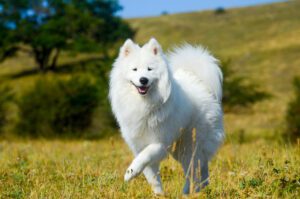
However, anyone who has ever encountered a Samoyed knows that those big white coats are not for the faint of heart! If you want to own a Samoyed, be prepared to deal with moderate shedding, as well as a big undercoat shedding twice per year. These biannual sheds are when they will release the most allergens, so be prepared! From a day-to-day perspective, Samoyeds would be a good choice for individuals with mild-to-moderate dander allergies or who are primarily allergic to drool.
What are some hypoallergenic dog breeds?
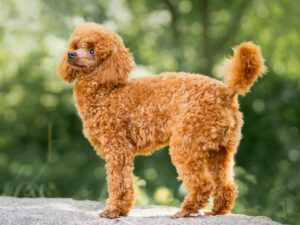
The first breed that comes to mind for most when considering hypoallergenic puppies are Poodles. Their iconic tightly curled hair is instantly recognizable. With their high levels of intelligence, wide litany of colors, and sizes to match every kind of lifestyle, Poodles are a classic for a reason!
If you would prefer luxurious locks to curls? Maybe a Yorkshire Terrier, a Havanese, or a Shih Tzu would be more your type! These breeds all grow long, soft coats that would reach the floor if you let them! Keep their hair long and flowing, or cut them short for a scrappy-but-adorable look! You can even mix and match with a “puppy cut” that keeps the body and legs trimmed short but with a fluffy face, ears, and tail.
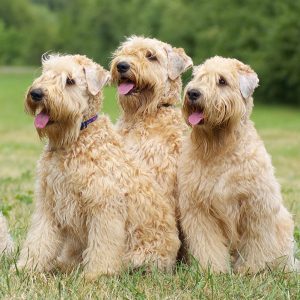
Think that only small breeds are hypoallergenic? Think again! Schnauzers and Poodles come in both mini and large sizes (Giant Schnauzers and Standard Poodles, respectively). A Soft Coated Wheaten Terrier is also an excellent choice for families looking for a medium-to-large size dog. Wheatens are affectionate, smart, and very versatile. They make for great family dogs!
None of these quite right? Check out our full list of hypoallergenic dog breeds that you may find in our stores.
Are doodles hypoallergenic?
The whole reason that the Labradoodle was popularized – and in turn, the reason that designer hybrids entered the public sphere of interest – was to try to cross a Poodle’s hypoallergenic coat with a Labrador’s bright personality. One may logically assume that all doodles are naturally hypoallergenic puppies. In reality, genetics are not always so straightforward.
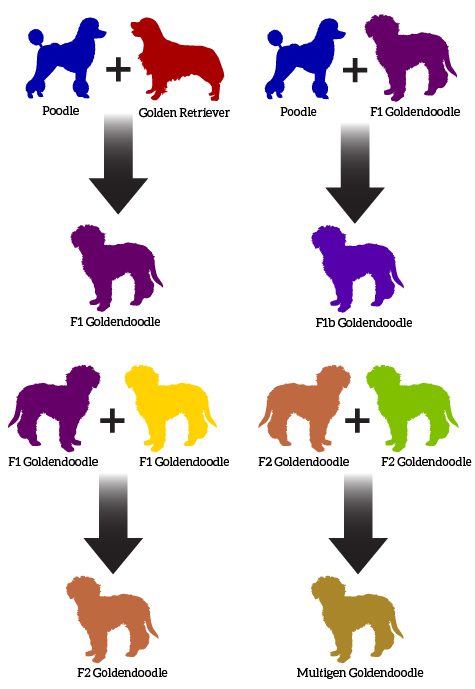 Every crossbreed between two purebred dogs is unique. Whether or not the offspring will be hypoallergenic depends on which genes express themselves in the puppy’s coat. This can differ between crossbreeds, litters, and even individual dogs! If you are hoping to buy a hybrid puppy and someone in your household has allergies, consider adopting an “F1B puppy”. “F1B” stands for “first-generation backcross”, which means that the offspring of two purebred dogs (for instance, a Poodle and Golden Retriever mixing to make a Goldendoodle) is bred with another purebred dog that is the same breed as their hypoallergenic parent (for instance, another Poodle). The resulting litter would be genetically 75% Poodle, making the expression of those curly hair genes much more likely. For a deeper dive into doodle coat types, check out our blog post on Goldendoodles.
What are the worst dog breeds for people with allergies?
Just as some dogs give off less allergens than average, the other end of the spectrum exists as well. If someone in your house is living with dog allergies, there are certain breeds that we would recommend against adopting. Some breeds, like Dobermans or Labrador Retrievers, are prone to dry skin, which can lead to an excess of dander being shed. Other dogs, like St. Bernards or Newfoundlands, may be giants with a heart of gold, but also drool like firehoses. A few breeds, like Basset Hounds and Bulldogs, are an unfortunate mix of both! For the comfort and happiness of all involved, steer clear of these breeds. We promise that there are many more adorable puppies who will be happy to have your attention instead!
How should I go about adopting a dog if I have allergies?
If you or someone in your house has dog allergies and you want to adopt a dog, your first step would be to reasonably assess the severity of your allergies. Those with extreme allergies to dogs should, unfortunately, probably stick to loving dogs from afar. Speak to your doctor about your plan to adopt a dog and what sort of symptoms, if any, to expect.
After that, your next move is to spend some time with a potential puppy. This is where your friendly Pet Specialists at Animal Kingdom and Puppies ‘N Love can help! We are happy to help you find the perfect puppy that both meets your lifestyle needs and is less likely to trigger your allergies. We also have private meet-and-greet rooms for you to spend some time with the puppy. After meeting with your possible-future-puppy, take a few hours away and monitor for symptoms such as rashes, itchy eyes, or wheezing. While not a guarantee, this will be a good indicator for how much a particular dog is an allergen trigger.